Stamps
At school, our teacher had us build a stamp collection. And I say build because we had to make the album ourselves using cardboard, tissue paper, two-prong fasteners… and finally add the stamps. Back then, we glued them in place because we only used cancelled stamps.
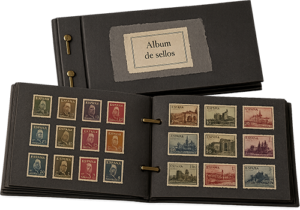
This school craft activity (it must have been around 1974 or so) gave me my first push into philately, the world of stamp collecting. At first it was probably closer to collecting trading cards, but over time it also became a learning tool: a way of discovering the culture and history of a country from a different perspective.
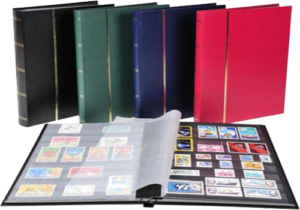
You soon realize that the best way to collect stamps, even cancelled ones, is not to glue them into an album. That is when the first transparent-strip album appears. The first stamps were used ones, and you searched for them everywhere: from the mail arriving at home (letters, postcards), while family members, already aware of my interest in stamps, would always save a few for me whenever we met.
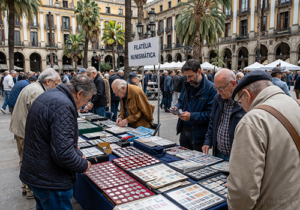
As the years go by, you become more deeply involved and begin a serious collection of mint stamps, buy a few catalogues, and stop going to the tobacconist’s shop just to buy stamps. You want older stamps that are no longer in circulation, so you have to visit a stamp dealer or perhaps spend a Sunday morning at Plaça Reial, at the Numismatics and Philately Market.
My mother started working for the postal service and, at that time, she had all the information about new stamp issues completely up to date. She even had the promotional brochures (which I also ended up collecting) for every new official stamp release.
Meanwhile, my grandmother had long been buying several copies of each new annual stamp issue, one for every grandchild, thinking of it as an “investment.” As more grandchildren arrived, managing my grandmother’s stamp collection became increasingly complicated. My mother was the one who brought her the stamps — by then there were already eleven grandchildren — and I was responsible for mounting them in the transparent-strip albums. Since all this became more cumbersome every year, by Christmas our grandmother would simply give us the stamps directly. We only had to worry about acquiring the last issues released in December.
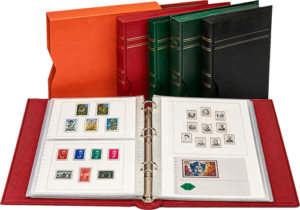
Over time, you want to improve your collection, not only in its contents but also in its presentation, and you move everything into printed albums: the kind that already indicate on each page which stamps belong there and exactly where they should be placed. The collection becomes a delicate, valuable, and artistic system. Until one day you decide enough is enough.
Year after year, the postal service kept expanding the concept of philately: it was no longer just about stamps. First came the “aerograms” and “postcards”; later, “souvenir sheets,” “first-day covers,” “brochures”…
Obviously, all this meant the collection became far too expensive, and in the year 2000 I decided to stop collecting. From then on, I only made the effort to complete the stamp collection up to the year 1965, the year I was born.